






One minute your little one is staying exactly where you put them. The next, they’re crawling toward the one room you were hoping they wouldn’t notice. Once babies get moving, there’s a whole house to explore—and suddenly, babyproofing feels a lot more urgent.
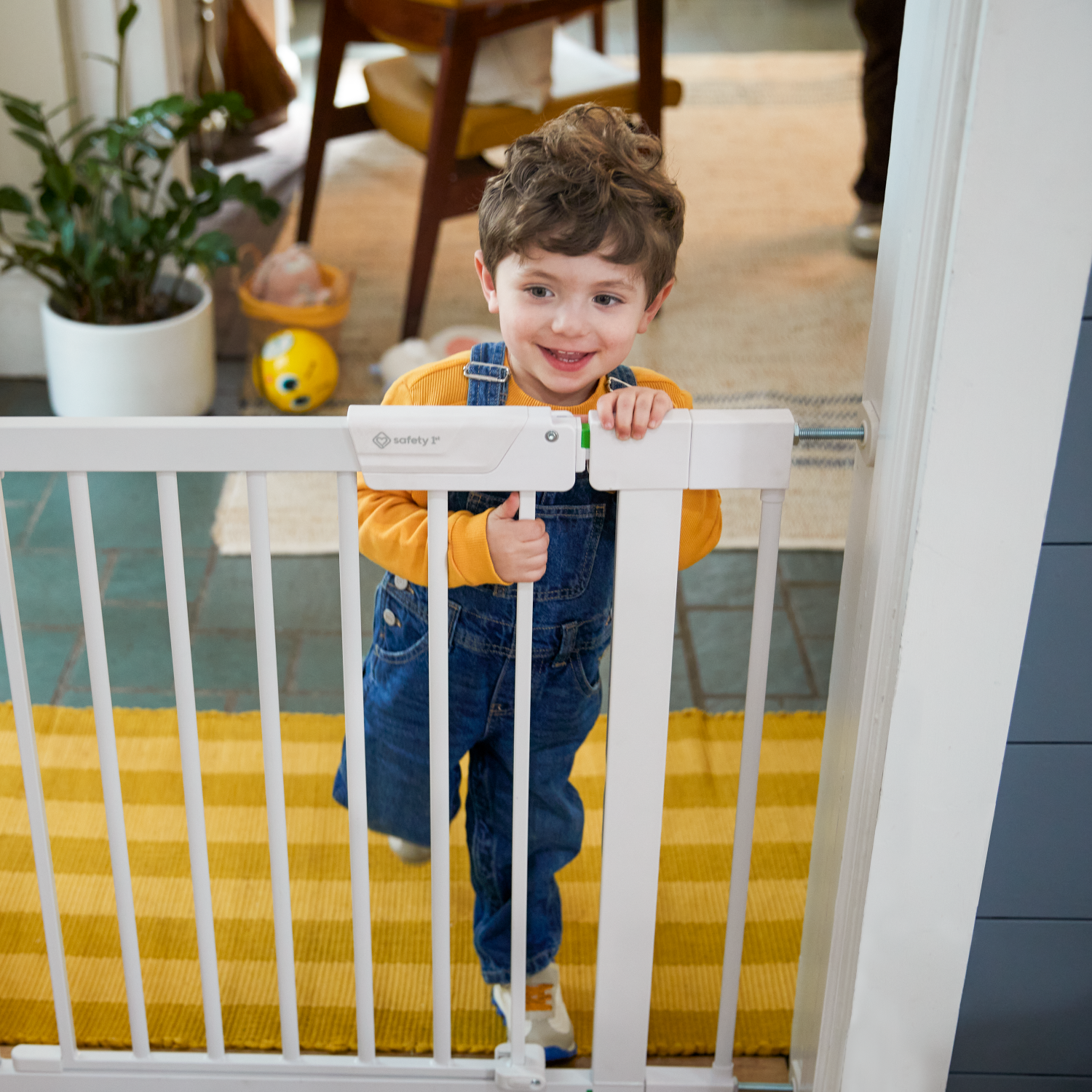
That’s where baby gates come in. A properly selected and installed child safety gate can help prevent falls down stairs and keep curious little ones away from rooms and areas that may not be ready for exploring just yet.
But which kind of gate goes where? And what’s the difference between a pressure-mounted baby gate and a hardware-mounted baby gate? We’re here to help make choosing the right gate one less thing to overthink.
What Is a Baby Gate?
A baby gate is a barrier designed to help keep young children away from stairs, rooms, and other areas of the home you want to keep off-limits. As soon as your baby starts crawling, safety gates can become an important part of your overall babyproofing setup.
Where you plan to use the gate matters just as much as the gate itself. Different mounting styles are designed for different spaces, so start by thinking about exactly what you need to block off.
What’s the Difference Between Hardware-Mounted and Pressure-Mounted Baby Gates?
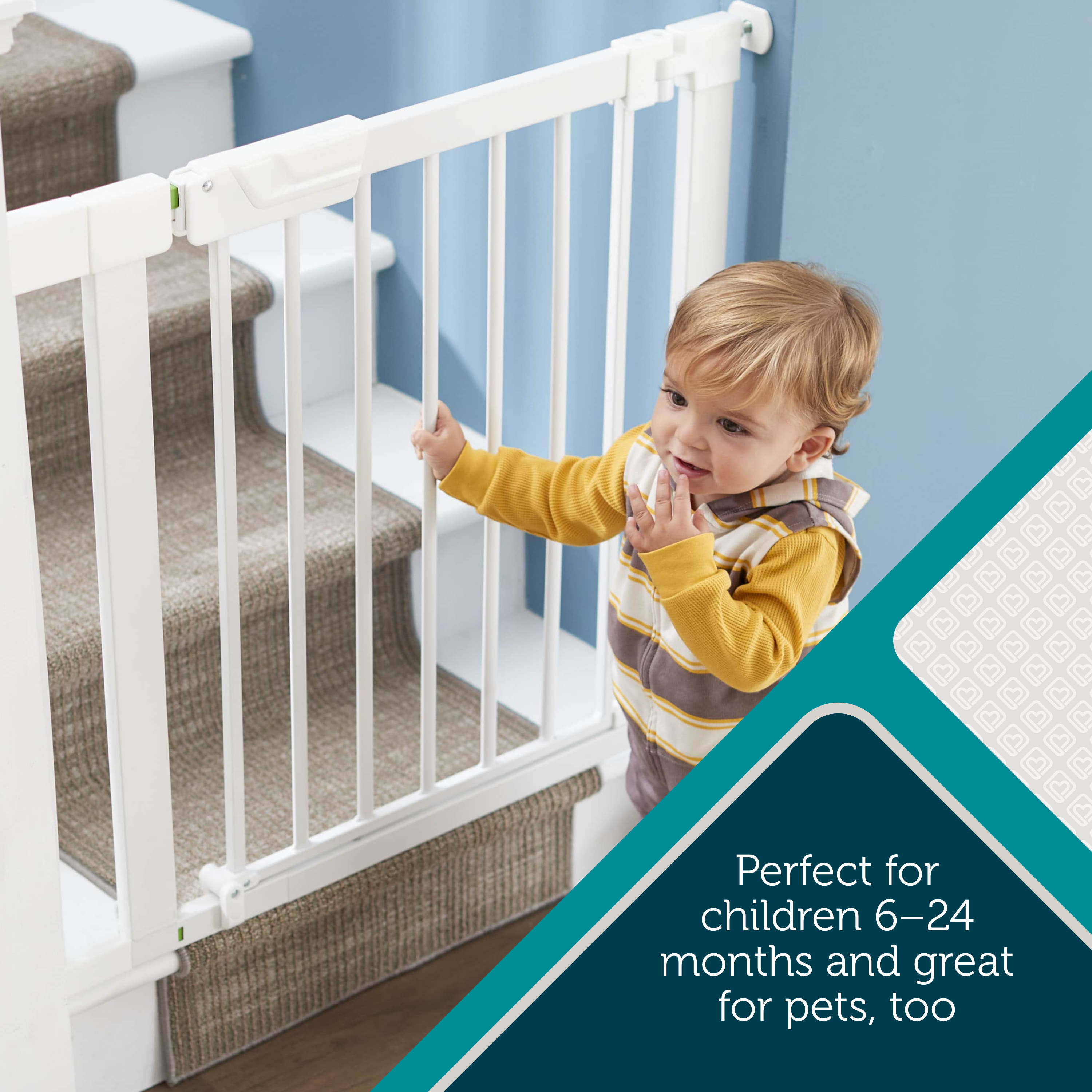
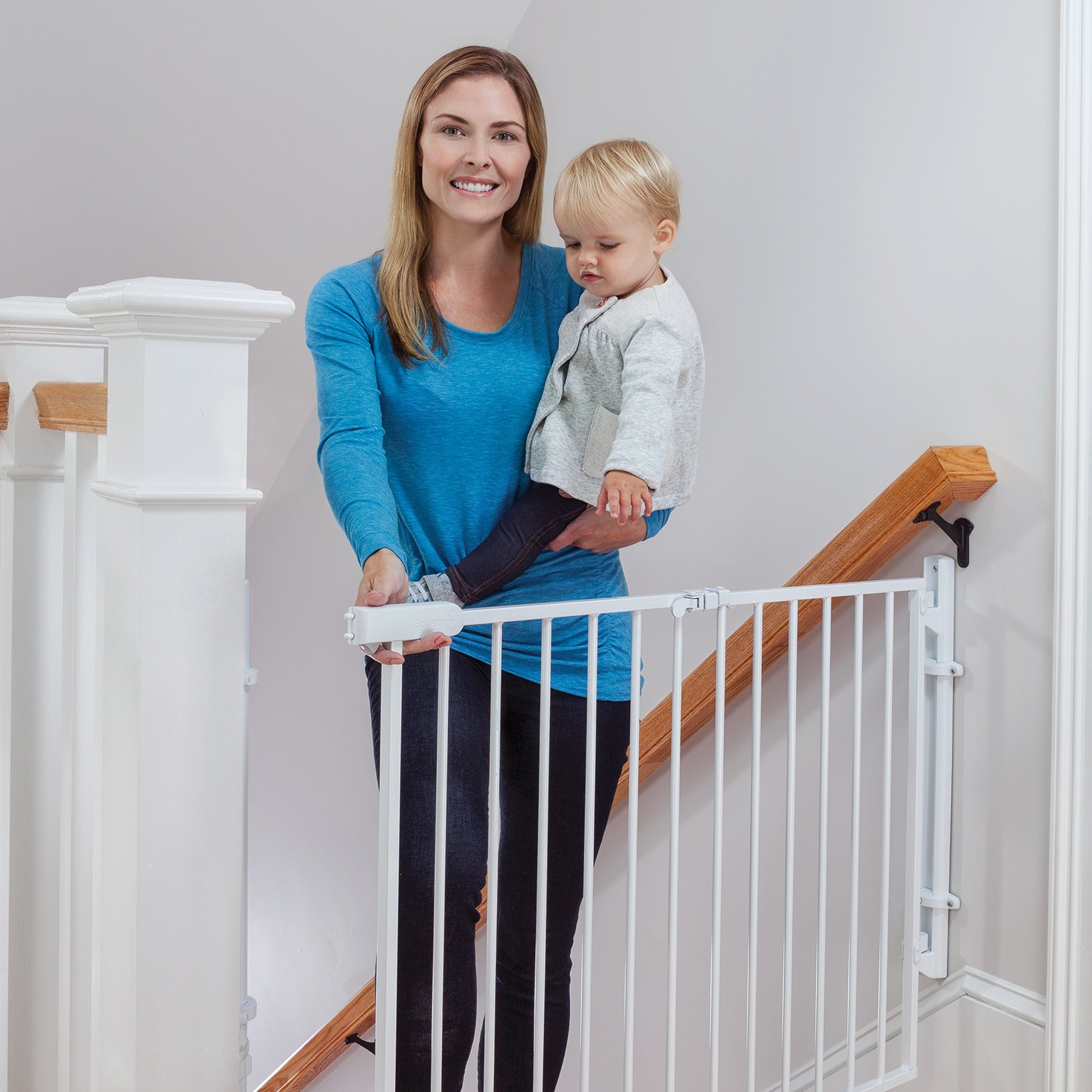
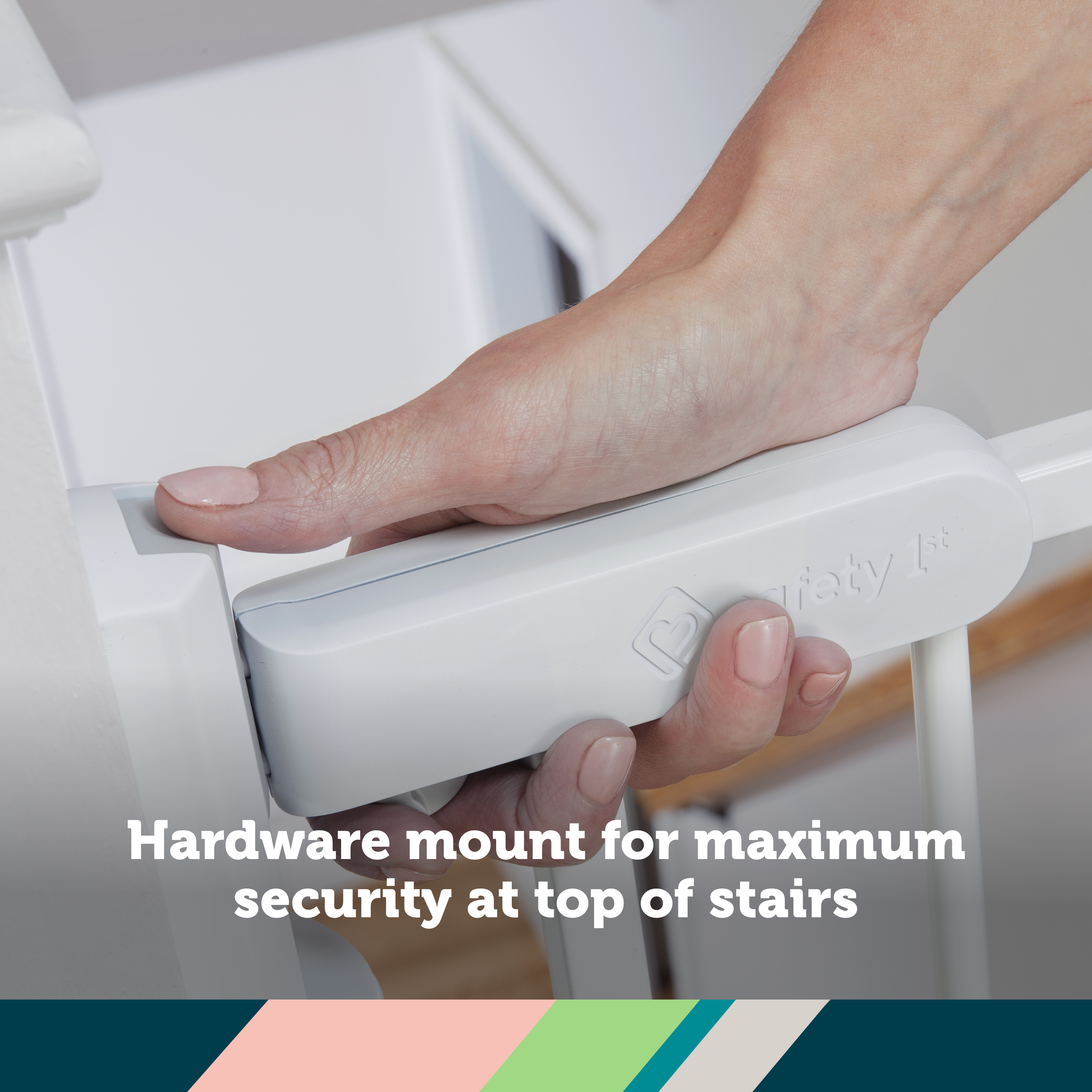
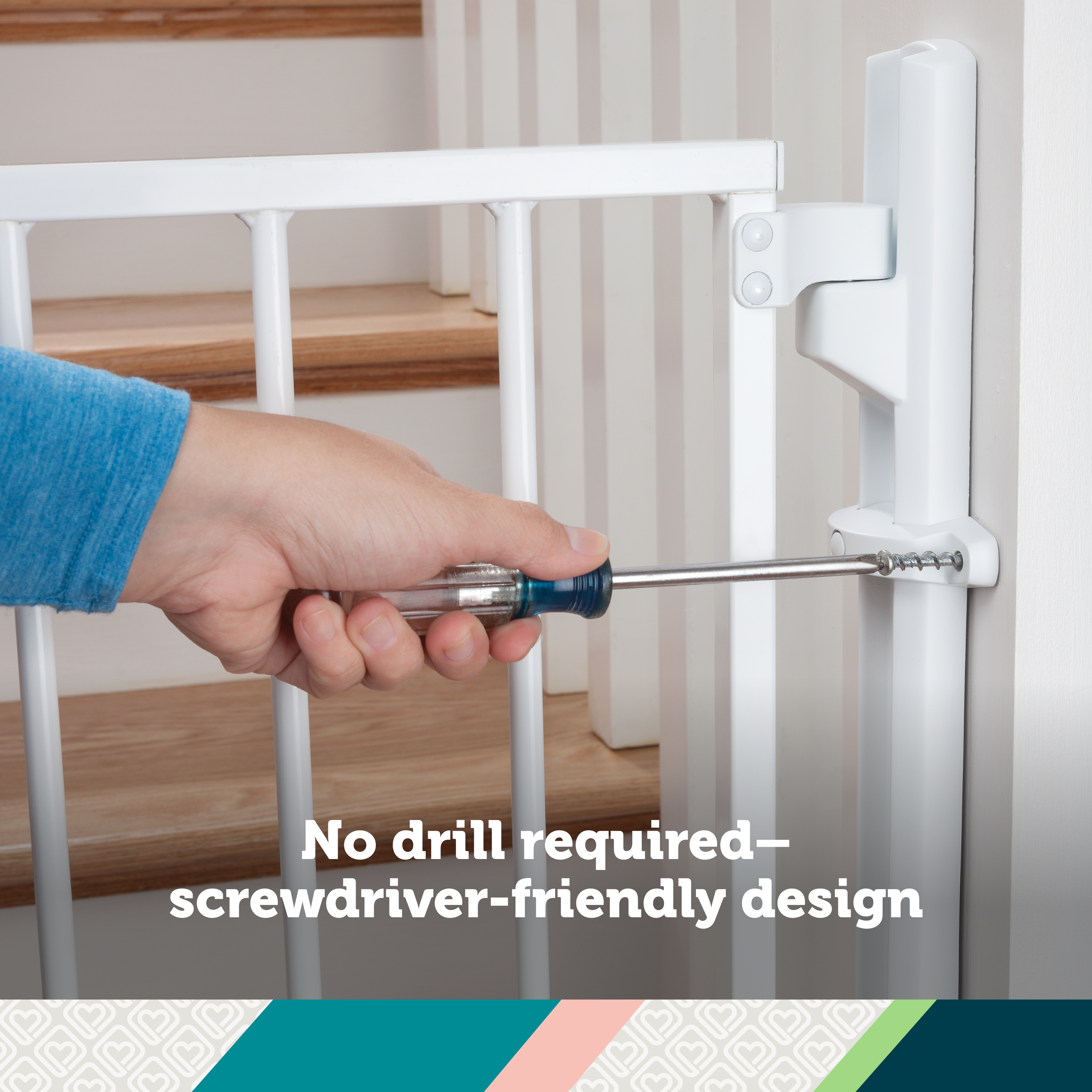
Hardware-mounted baby gates attach directly to a wall, doorway, or other approved mounting surface using screws or additional hardware. Because they’re secured to the structure around them, this type of gate that screws to the wall is specifically advised by the CPSC for use at the top of the stairs.
Pressure-mounted baby gates stay in place using pressure against the walls or doorway rather than relying on the same type of permanent screw-mounted installation. They can be a convenient option for appropriate doorways, entryways, and other areas where you may want more flexibility.
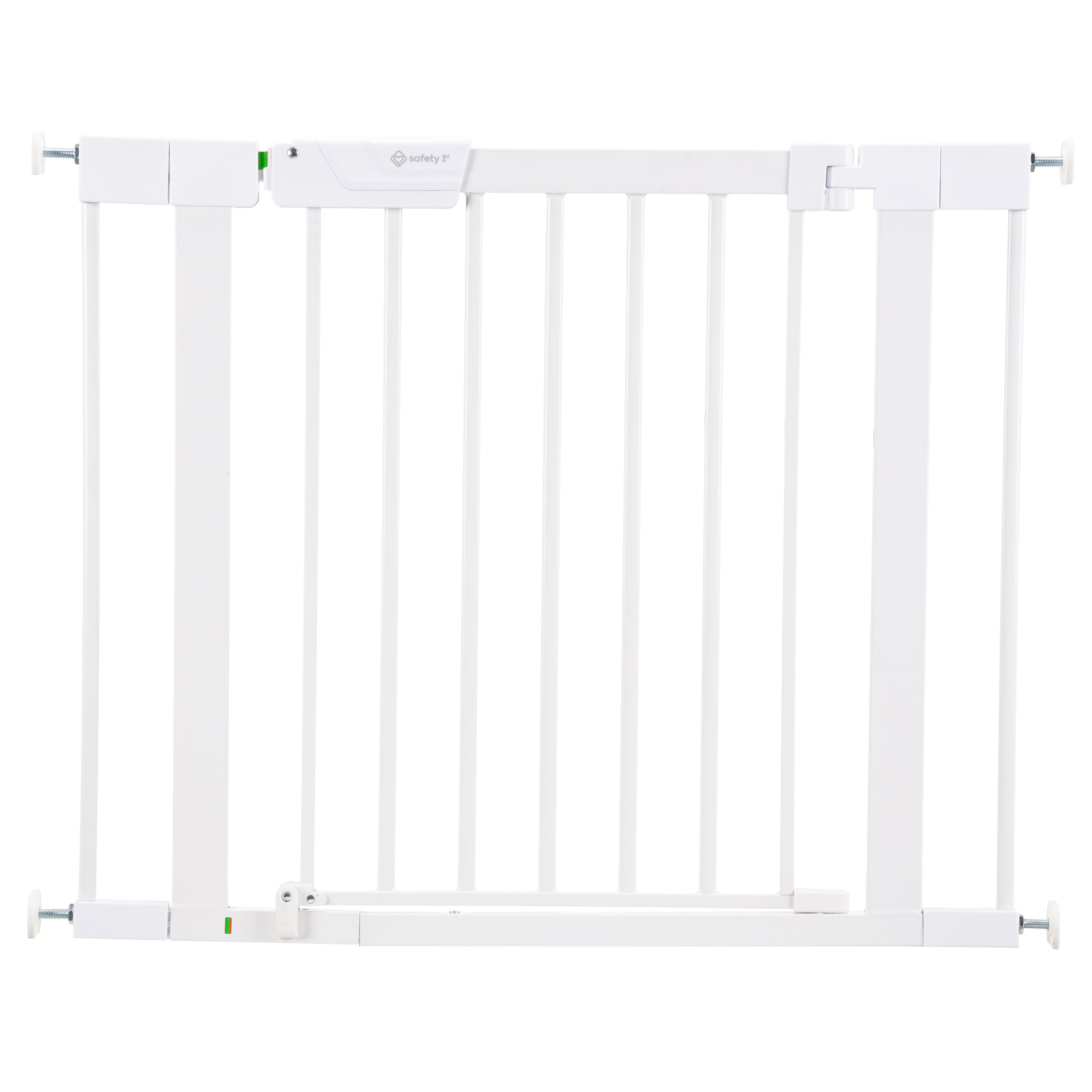
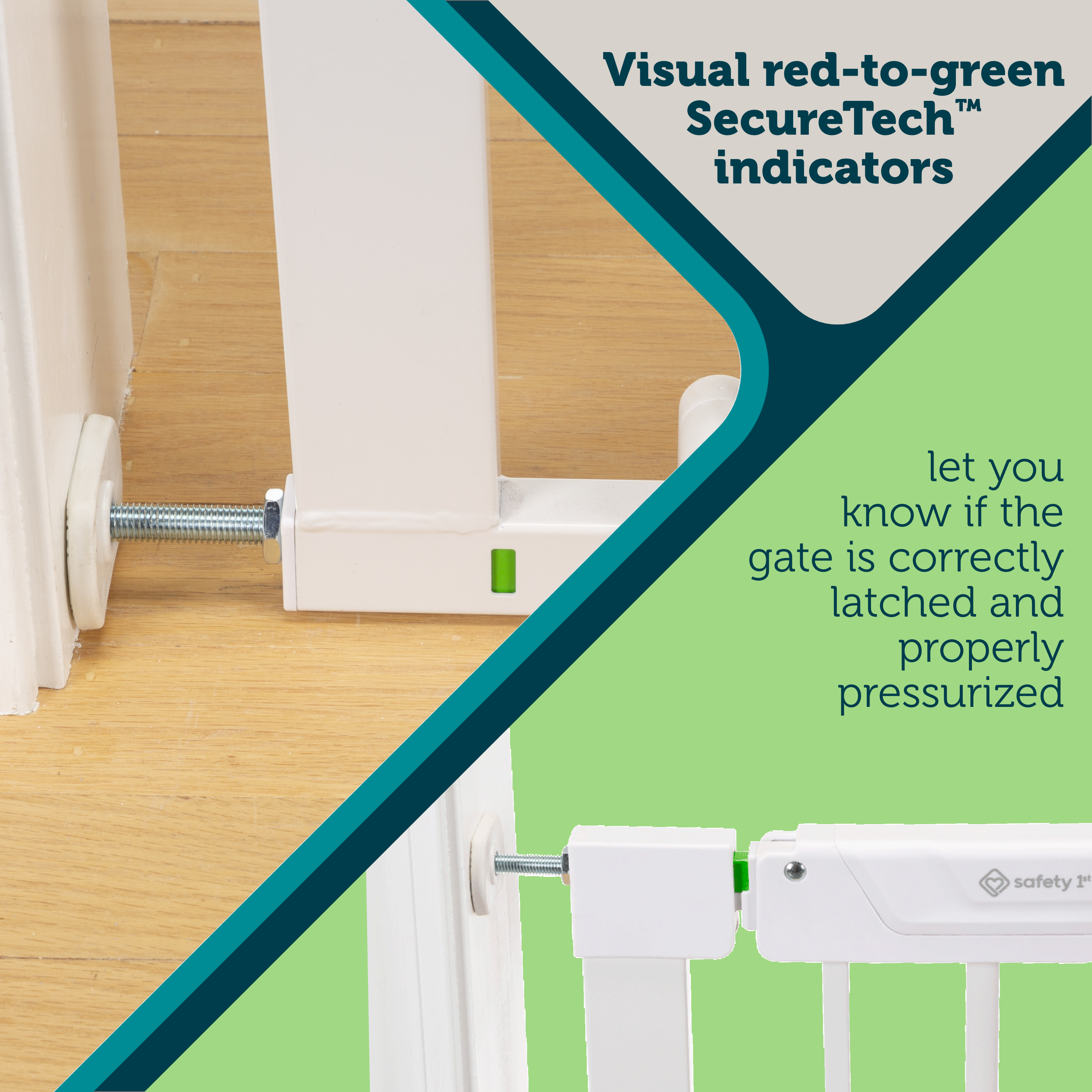
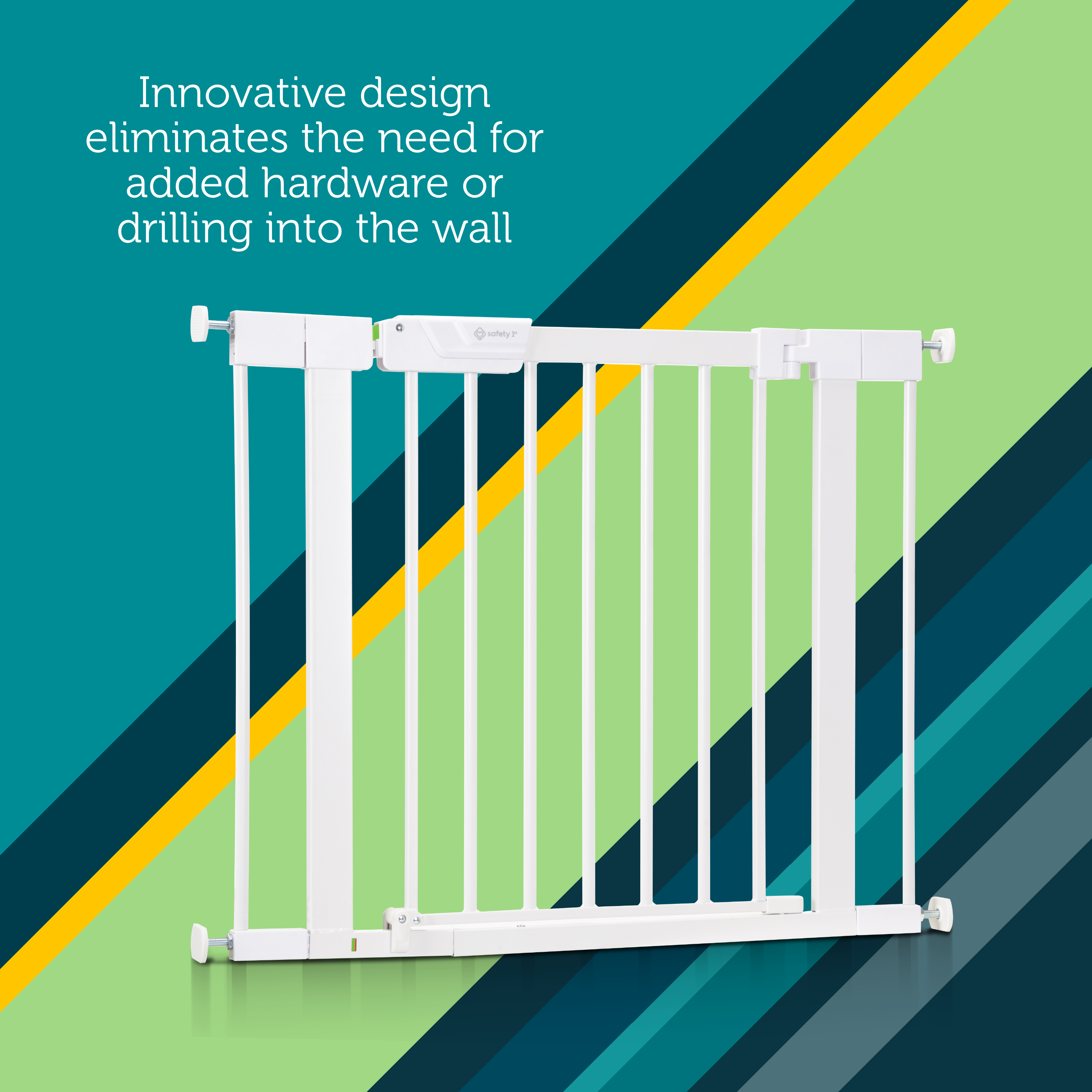
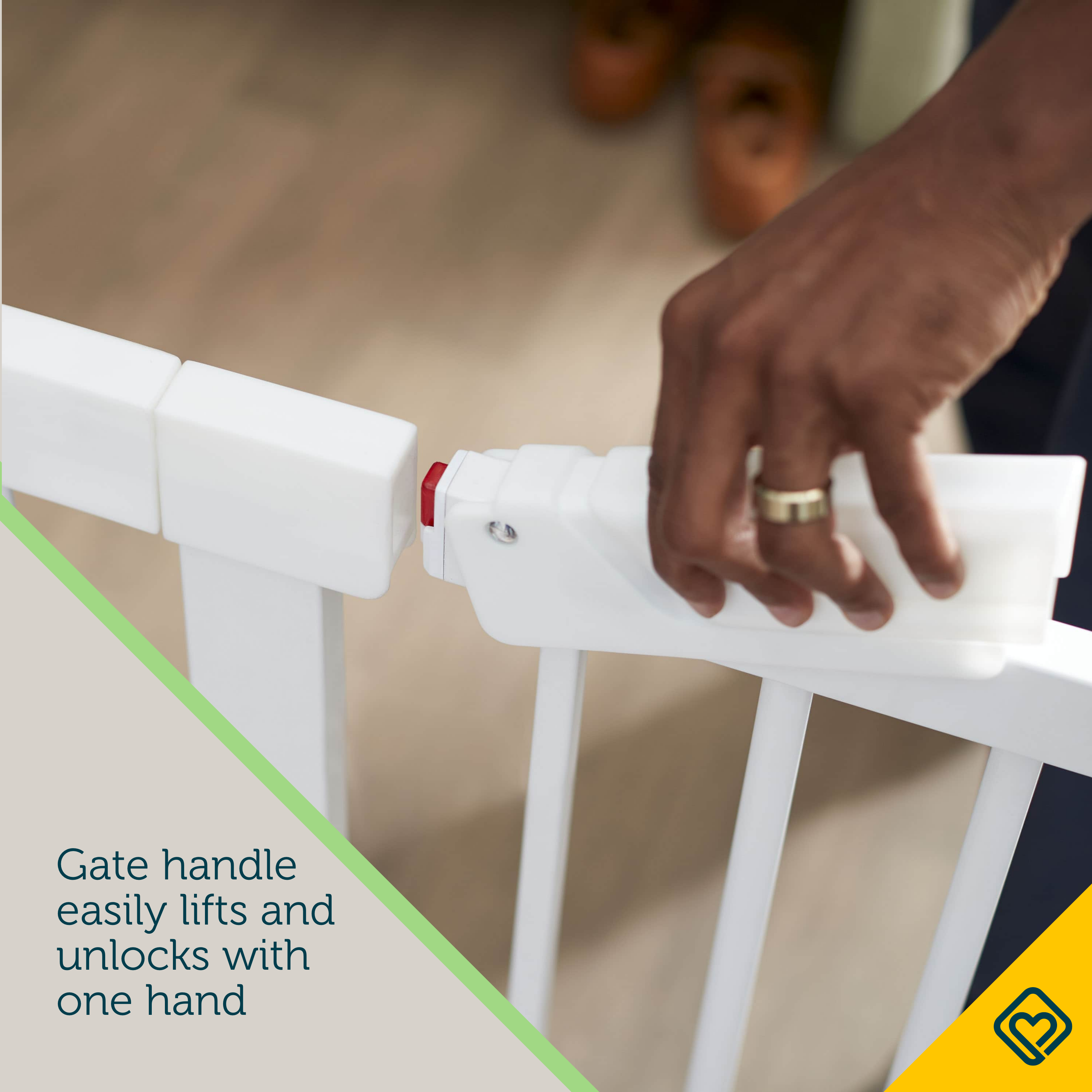
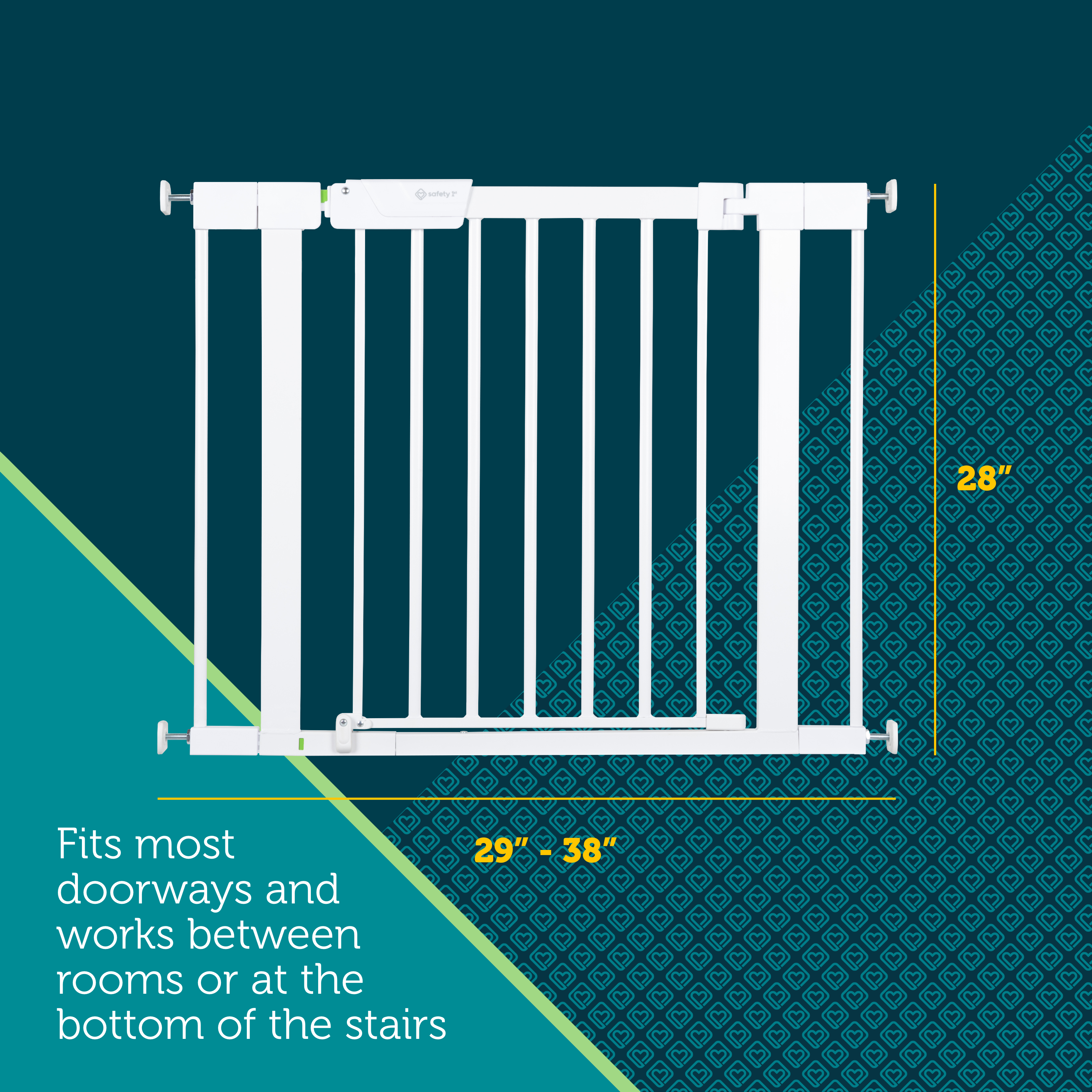
For a flexible between-room option, the Pressure-Check Baby Gate with SecureTech® uses red-to-green indicators on both the top and bottom rails to help you see when the gate is correctly latched and properly pressurized. Its pressure-installed design requires no drilling or added hardware, and the one-hand handle makes it easy for adults to move through. It fits openings from 29"–38" and is intended for use between rooms or at the bottom of stairs—not at the top of stairs.

Shop the Pressure-Check Baby Gate with SecureTech®
Just remember: not every gate is designed for every location. Always follow the gate manufacturer’s installation instructions and warnings for where and how that specific model should be used.
What Type of Baby Gate Should You Use at the Top of Stairs?
Use a hardware-mounted stair gate that is specifically approved by its manufacturer for top-of-stairs use. For babyproofing this space, the CPSC recommends using gates that screw to the wall at the top of stairs, rather than relying on a pressure-mounted gate.
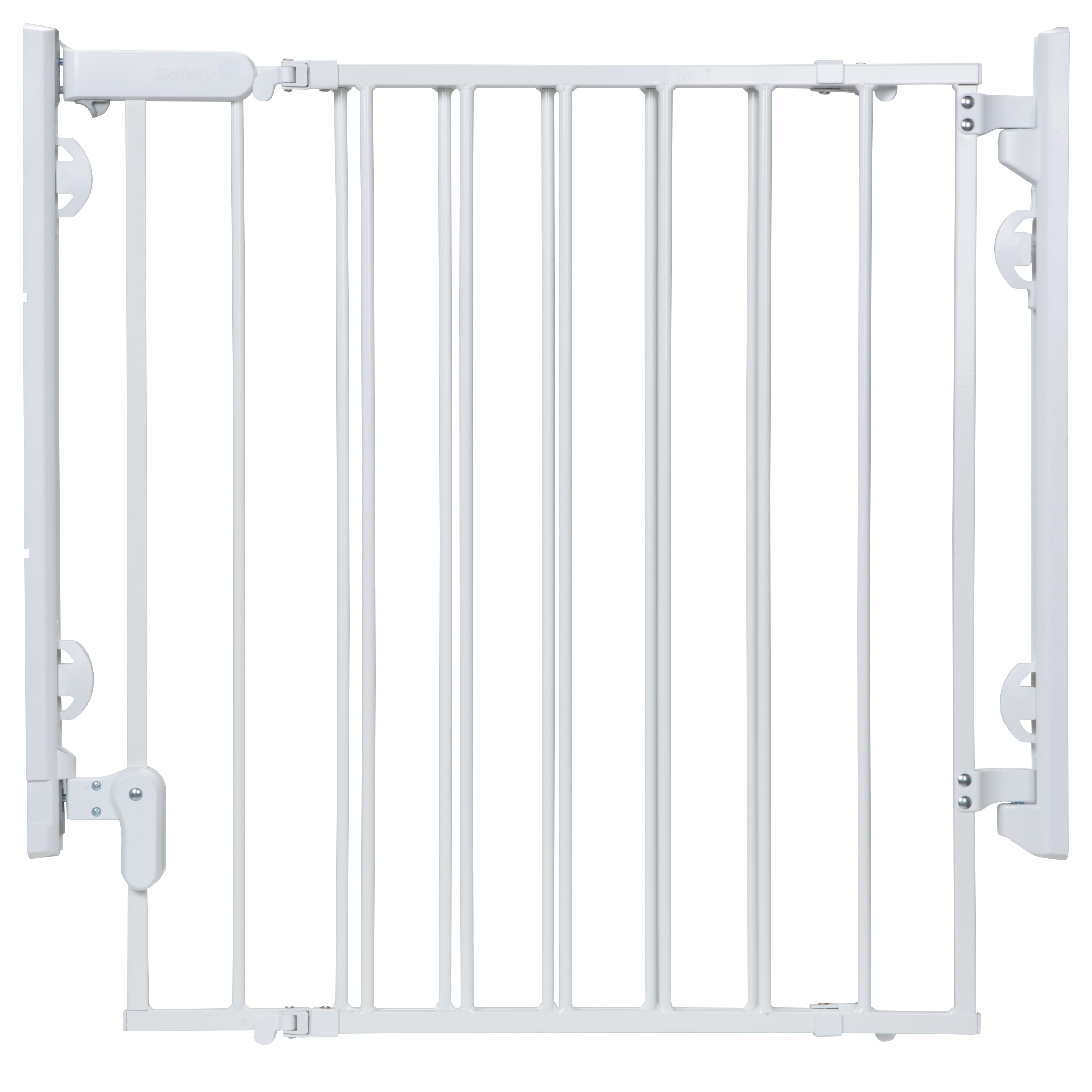
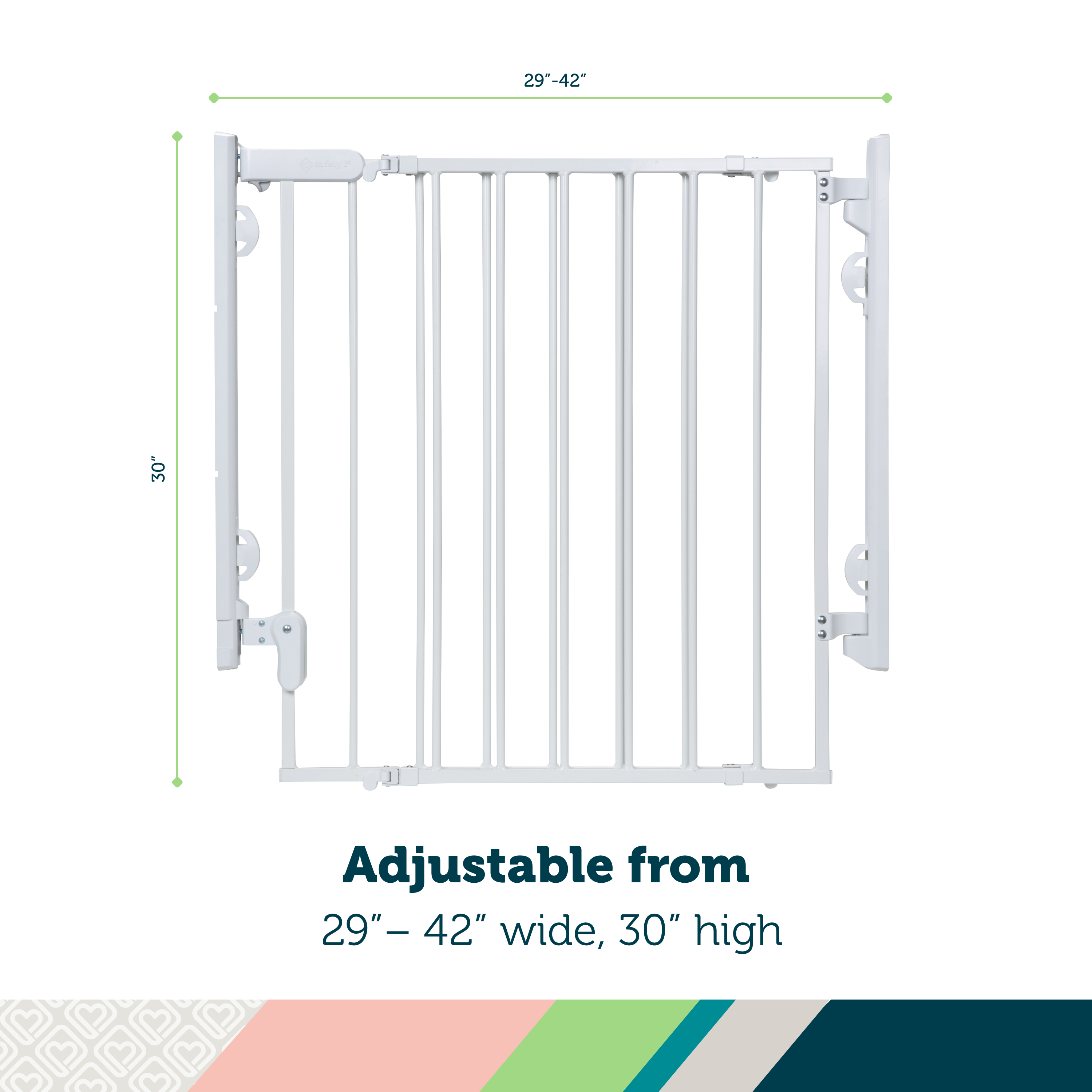
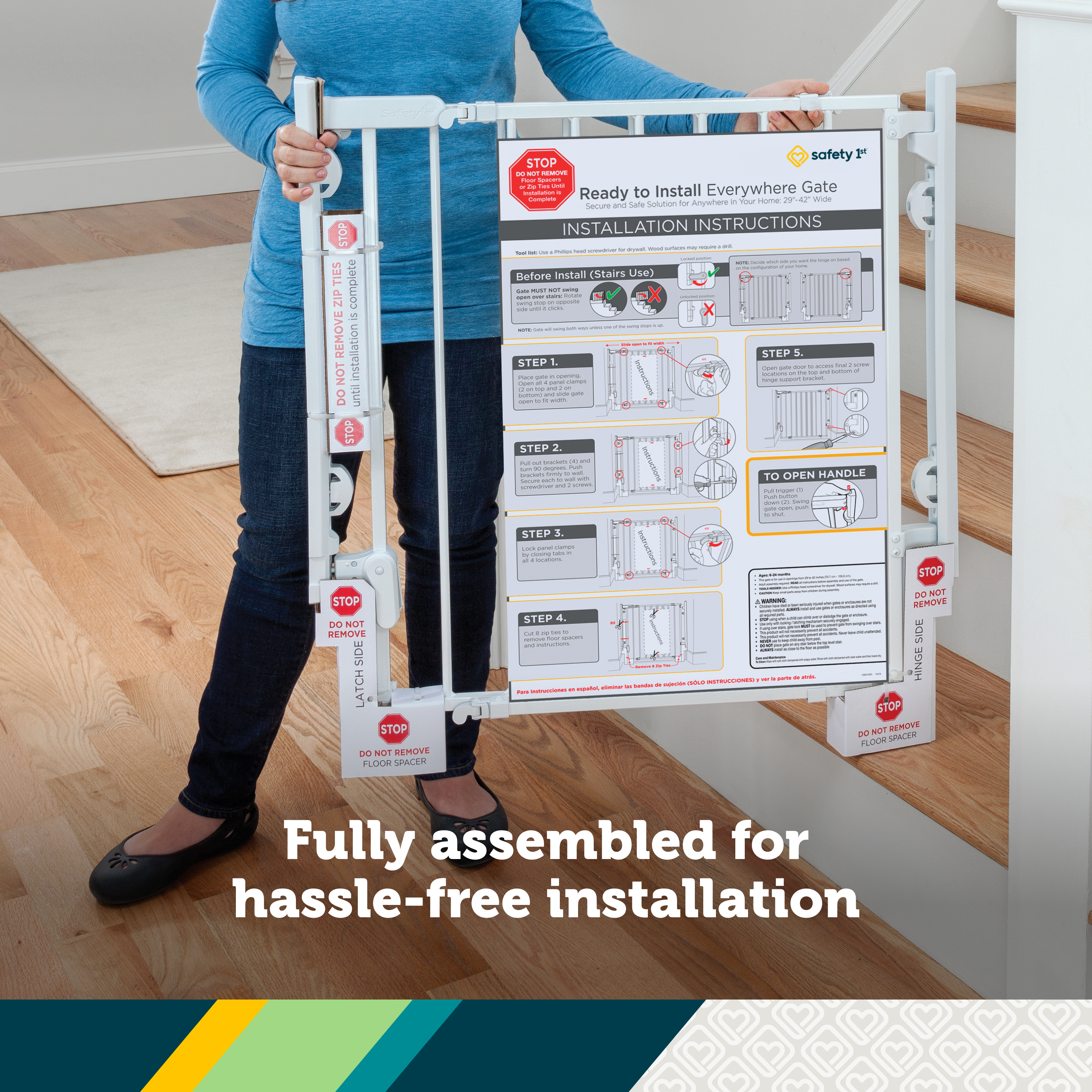
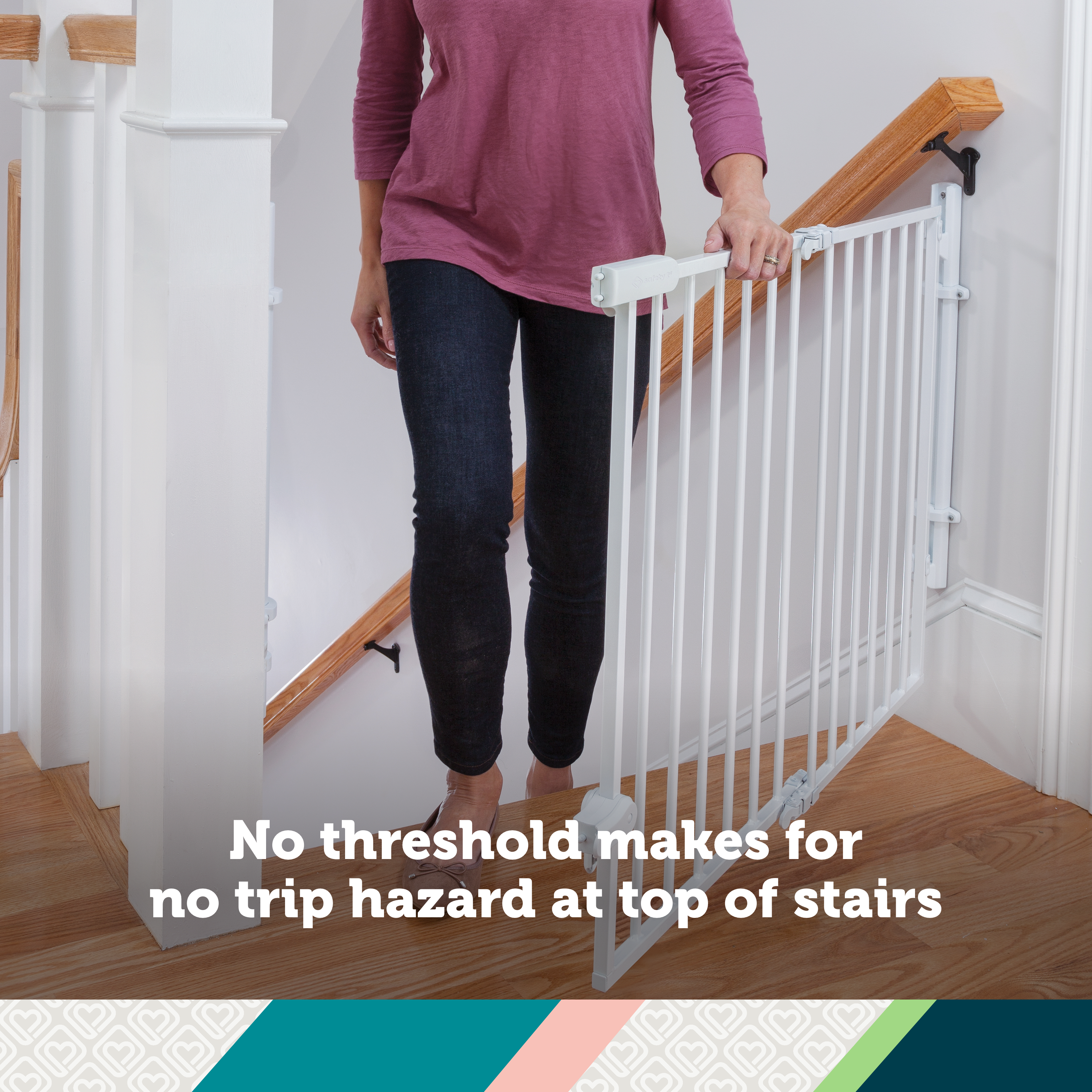
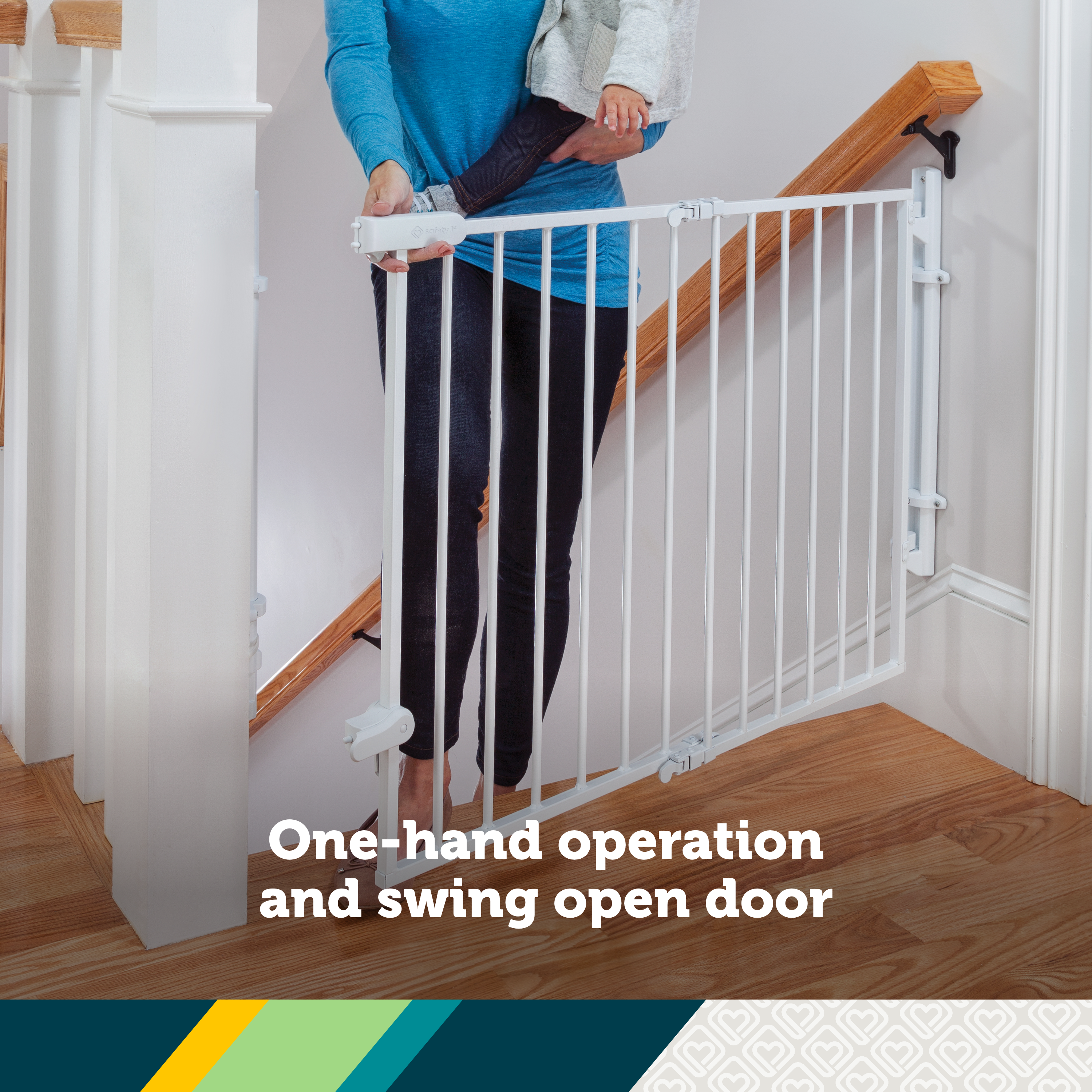
When a hardware-mounted gate is needed, the Ready to Install Baby Gate is designed for use at the top or bottom of stairs as well as between rooms. It comes fully assembled and features a no-threshold design to eliminate a trip hazard at the top of the stairs. One-hand operation, a swing-open door, and an easy-closing design help make everyday pass-through simpler. The gate fits openings from 29"–42" and requires a flat mounting surface at least 3.5" wide.

Shop the Ready to Install Baby Gate
When you’re shopping, check the product instructions and warnings instead of assuming every baby gate can safely go everywhere. A few extra minutes spent choosing the right gate for the space can make your babyproofing setup feel a whole lot simpler.
How Do You Measure for a Baby Gate?
Before buying a child safety gate, measure the opening where you plan to install it. Different baby gates accommodate different width ranges, so knowing the dimensions ahead of time helps you choose a gate designed to fit that particular space.
Measure each location individually—even if two doorways look about the same. Because if parenting teaches you anything, it’s that “close enough” has a way of becoming a project later.
What If You Need a Baby Gate for a Wide Opening?
If you need to block off an opening that’s wider than a traditional doorway, look for an extra-wide baby gate designed for larger spaces. Traditional gates commonly fit standard doorway-sized openings, while wider areas may call for a gate with a larger fitting range.
Need a little more coverage? The Easy Install Tall & Wide Baby Gate adjusts from 29"–47" wide and stands 36" high, making it a helpful option for larger doorways and throughways. SecureTech® provides a red-to-green visual indicator when the gate is securely locked, while the included wall cups stay installed so the gate itself can be removed when you don’t need it. It’s designed for use between rooms or at the bottom of stairs and should never be used at the top of stairs.

Shop the Easy Install Tall & Wide Baby Gate
Whatever size you choose, make sure the gate is intended for that opening and installed according to its instructions.
Ready to Find the Right Baby Gate?
Once your little one starts moving, their world gets bigger fast. Choosing the right baby safety gate for your stairs, doorways, and wider openings can help give them room to discover while helping you create boundaries around the spaces that aren’t quite ready for tiny explorers.
Start with the location, measure your space, choose the right mounting style, and follow the installation instructions for your gate. A little preparation now can help make those crawling, cruising, and everywhere-at-once days feel easier to navigate.
At Safety 1st, we’re here for all that exploring along with helping you feel prepared and confident while they do it. Because curious kids should have room to discover, and parents deserve a little peace of mind along the way.
Shop Our Safety 1st Child Safety Gates: https://safety1st.com/collections/baby-gates

Frequently Asked Questions About Baby Gates
What type of baby gate is safest for the top of stairs?
A hardware-mounted baby gate is the appropriate choice because it attaches directly to the wall or another approved mounting surface.
What is the difference between a pressure-mounted baby gate and a hardware-mounted baby gate?
Pressure-mounted gates use pressure to stay in place, while hardware-mounted gates attach directly to the mounting surface with screws or hardware.
How do I know what size baby gate I need?
Measure the opening before shopping and choose a baby gate designed for that width. For larger spaces, look for an extra-wide baby gate.
What baby gate is best for a wide doorway?
Choose a wide or extra-wide baby gate that fits your opening. The Safety 1st Easy Install Tall & Wide Baby Gate adjusts from 29" to 47" wide.
When should I start using baby gates?
Start babyproofing with safety gates as your little one becomes mobile and begins crawling and exploring beyond their usual play space.